Do you have a dead bee colony in your home? Is honey leaking out of your ceiling/wall/fireplace? Are maggots crawling out of it? I can help.
Problems with dead hives used to be rare. But mid-2022, the Varroa Destructor mite came to Australia for the fist time, landing in Newcastle. The NSW Dept of Primary Industries spent over $100M trying to eradicate it. They did not succeed. By mid-2024, it was widespread through the Sydney basin. Colonies are weakened by the mite and then succumb to other pests and diseases. Without the bees to protect the honey combs, Small Hive Beetles move in and disturb the honey, causing it to leak out. Beekeepers call this a “slime out”.
You can see a map of the Varroa mite’s spread in NSW here.
Resolving these situations usually requires opening the roof/ceiling/wall/chimney, removing the old nest, scraping out all of the honey, and replacing/repairing the surface. Disposal of the the tainted honey is a major hassle… For walls/ceilings, I typically replace damaged Gyprock on the same day. All joints with be taped and plastered smooth, ready to paint after the plaster has dried.
Below are examples of honey leaking from dead colonies in the ceiling cavity. There is no way to stop the flow without removing the source -the honeycombs.


Below photos are from an apartment in Glebe, where honey was leaking from cracks in the original lath & plaster ceiling. With the plaster removed, you can see the wooden laths, soaking wet with honey. With the laths removed, I could access the honeycombs, still holding over 10kg of honey. This was all cleaned-out and the ceiling repaired on the same visit. I returned a week later to paint the ceiling after the plaster patch had dried.
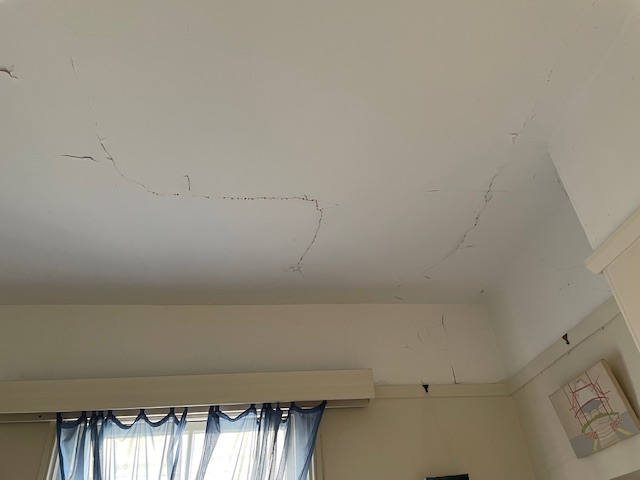


Below is a similar situation where the bees were nesting above a lath & plaster ceiling, in Burwood. In this case the honey was not yet leaking through the ceiling and we could access the nest via the floor above, which preserved the elaborate crown moldings below. I finished the clean-up by rinsing with hot water, wet-vacuuming, and using a heater to dry the cavity before repairing the foor.
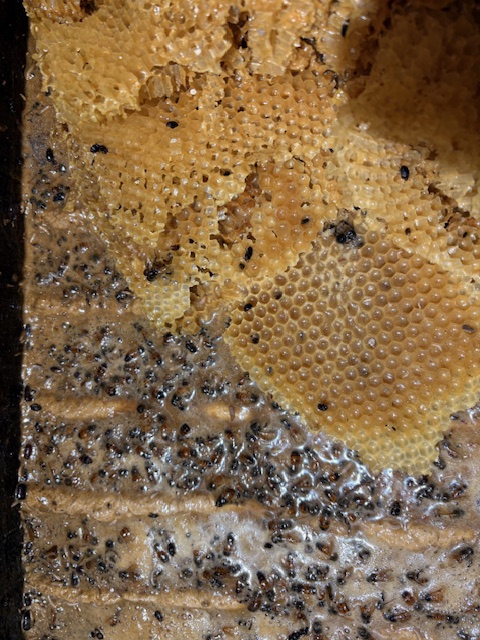
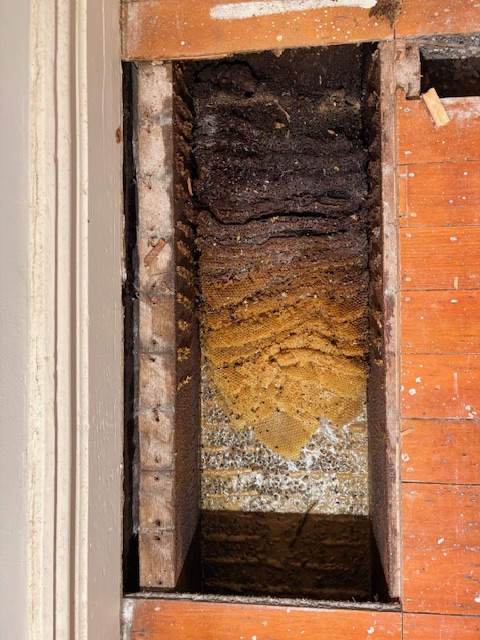


The photos below show how the honey combs have collapsed and the “slime” of fermenting honey is running down the cavity causing damage far away from the nest (honey dripping down the wall at front door).

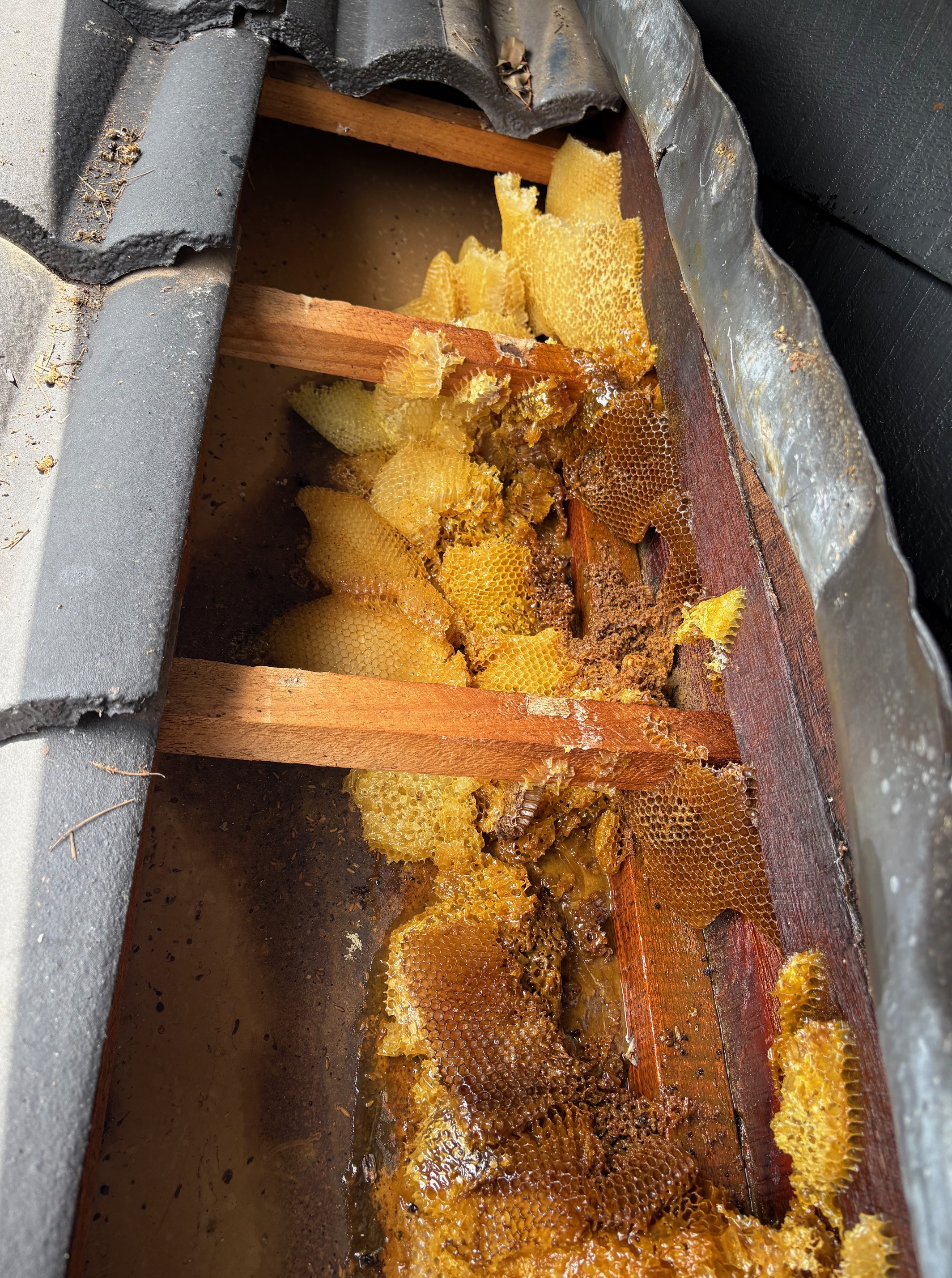


I get many calls for honey leaking out of chimneys. They have often been living there for many years without a problem, but when the bee colony dies, there is a big mess to clean up.
These photos show the top of a chimney. There was a piece of flashing over the flu, making a dry home for the bees. The nest was close to 2 meters tall. The photo on right shows the Small Hive Beetle maggots, about 4mm long. If you see maggots that are 10mm long, they are probably from the Wax Moth, another pest that lives in beehives. The honey/slime was dripping into the fireplace of this home in Hunters Hill.
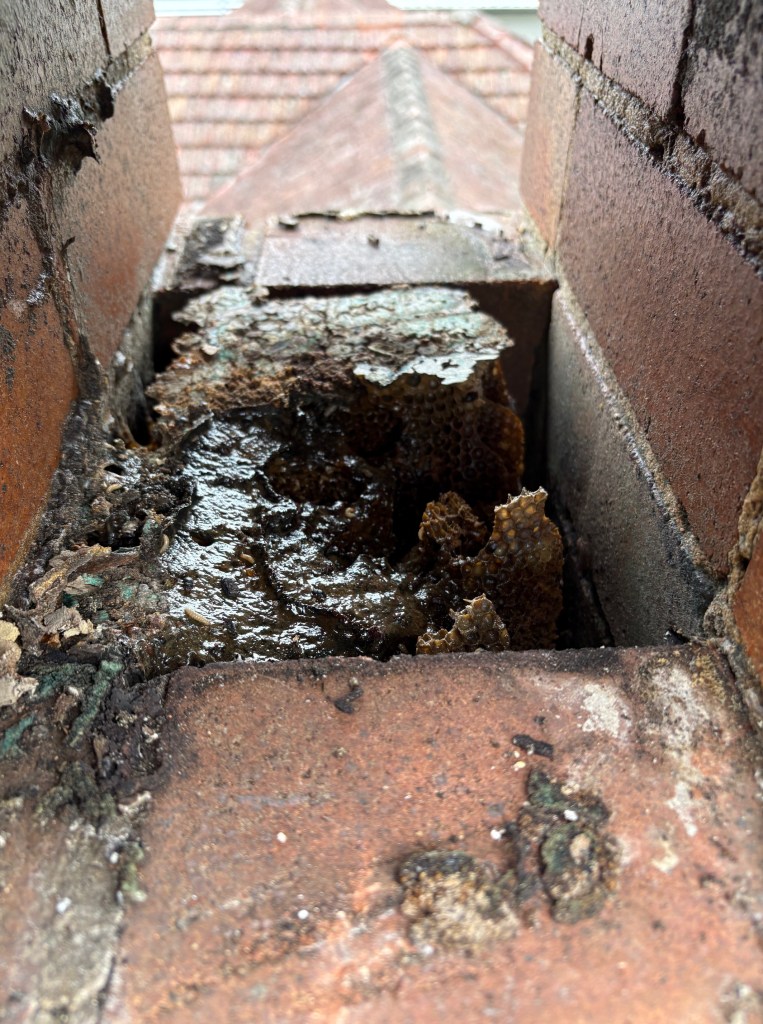
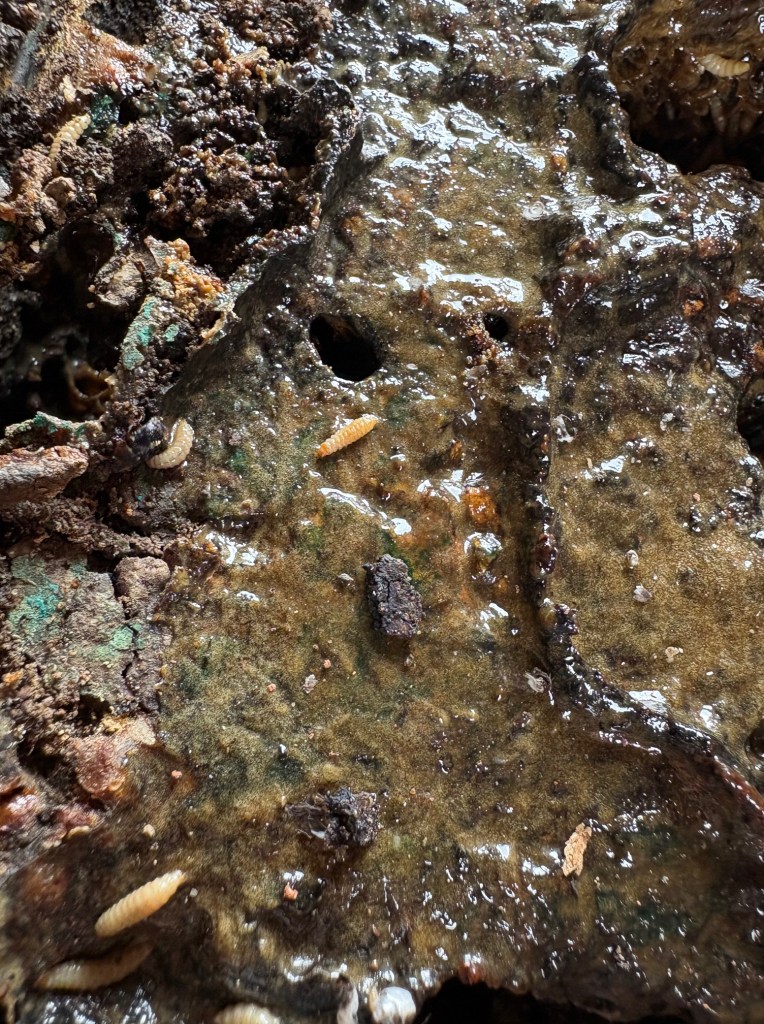
Removal of nests from chimneys starts on top, where I will remove as much of the nest as I can reach, down about 1 meter. If the nest this deeper than this, I will scrape the sides until the combs fall down into the fireplace, from where I can remove them. In some cases I will then wash out the remaining honey. I then carefully patch any holes in the mortar and seal the top of the flu, usually with a ceramic tile which is the most weather-proof.
Bees had been living in the chimney below for many years. When they died, the combs collapsed 2 meters down the chimney and honey leaked out. It spread across the ceiling until it dripped from of a down-light 3 meters away! Accessing the combs from above was impossible, so we removed a couple bricks to gain access to the combs:


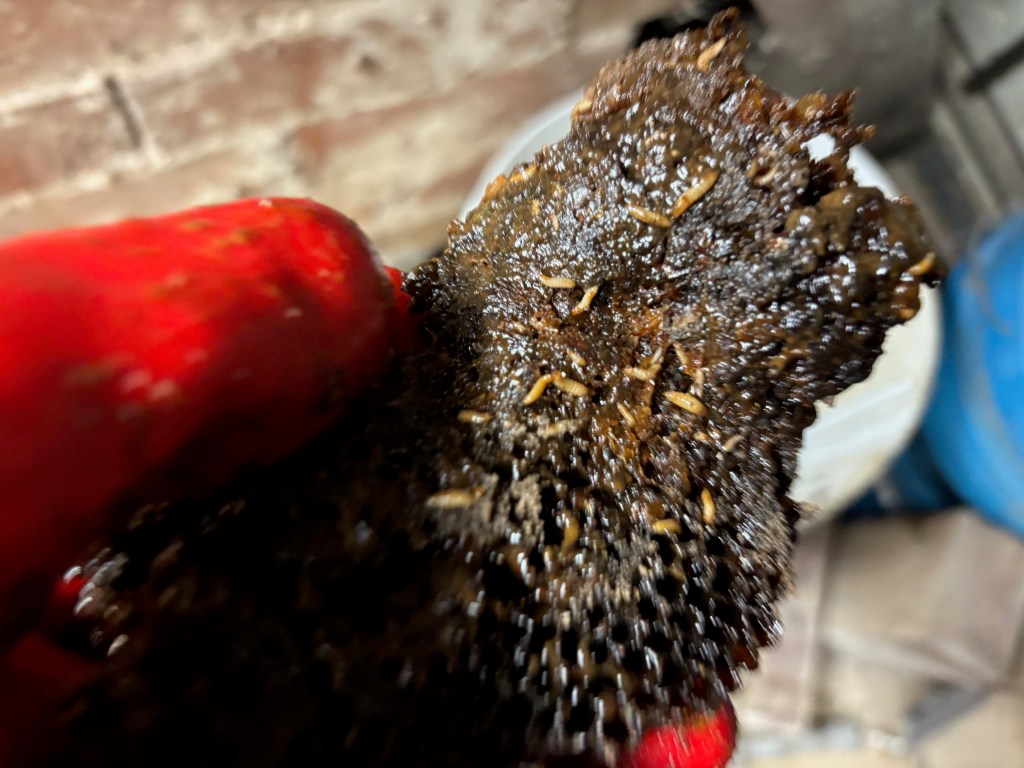
The homeowner was glad we found the source of maggots (Small Hive Beetle larvae) that were also dropping into their bedroom. We removed close to 20kg of maggot-infested honey combs…
We use probes and laparoscopic cameras to confirm exactly where the honey combs are. In this photo you can also see the honey pooling on top of the ceiling Gyprock:

The photo below shows a nest that was over 5 years old. Spoiled honey was leaking out over the ceiling fan. You can see a short video of this removal here: https://www.instagram.com/p/DEQ1Xq3TWXc/

Learn more about removal of bees from chimneys here.
Please call me to discuss your situation. Henry 0423 298 841
Return to my main page here.
 Bee and Wasp Removal Services. Beehives for sale.