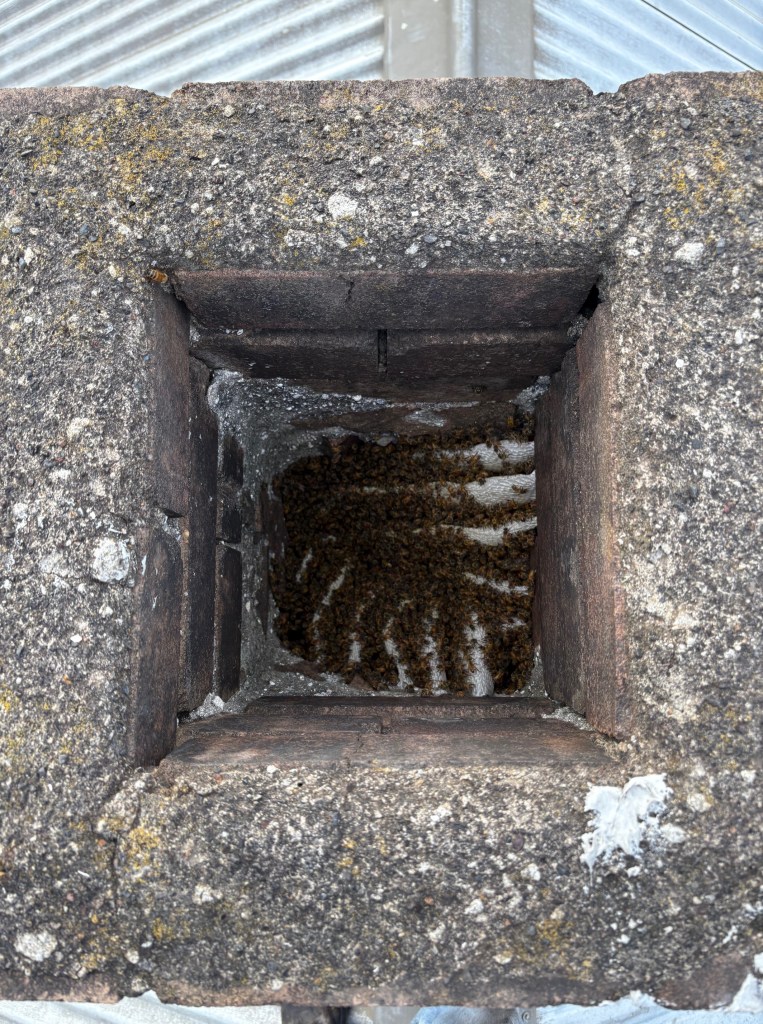
Bees will occasionally move into chimneys. This happens most often when the chimney has been capped/covered, but the bees find a hole to gain entry. To them, it feels like a hollow tree trunk.
Chimneys are always challenging, but they are becoming a specialty of mine. I have a Working at Heights trade qualification and have learned how to do them safely.
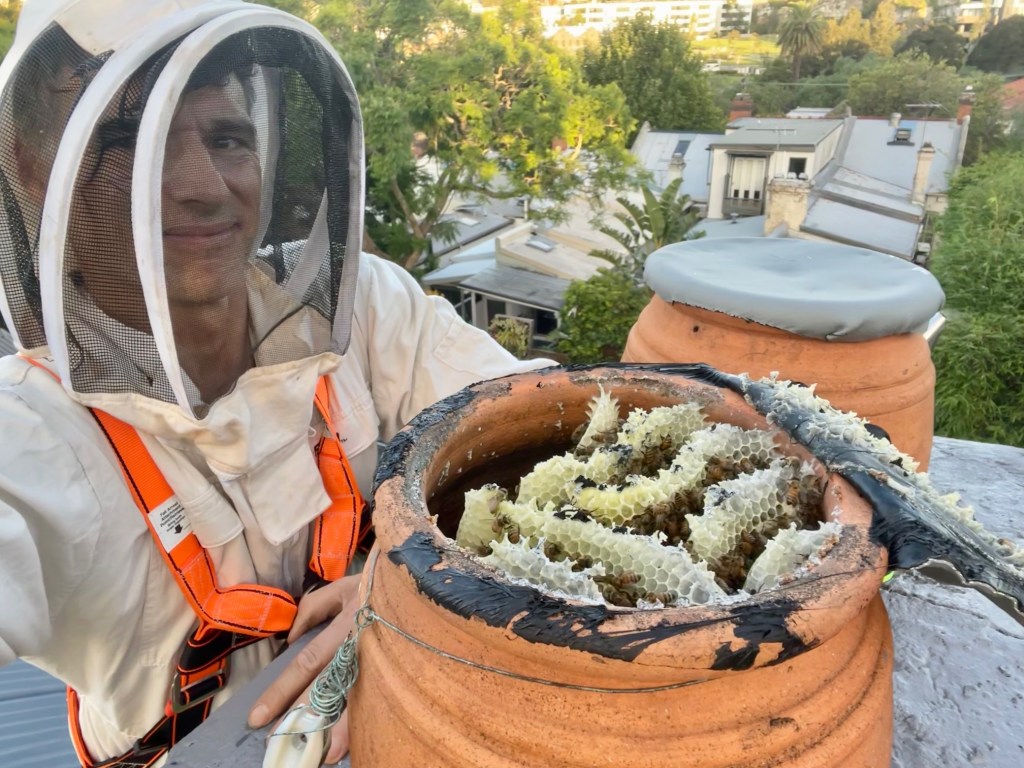
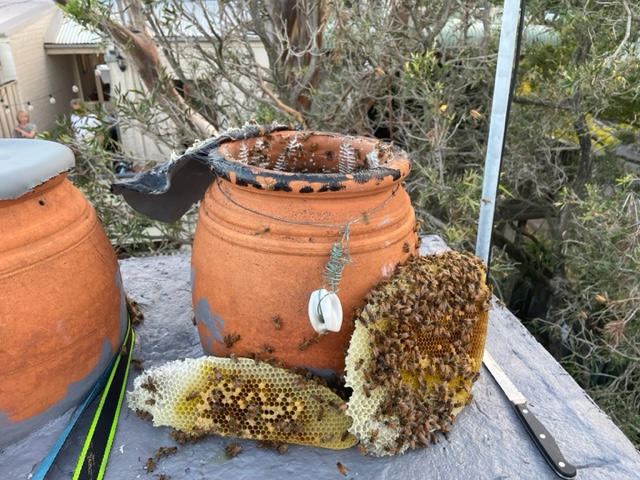
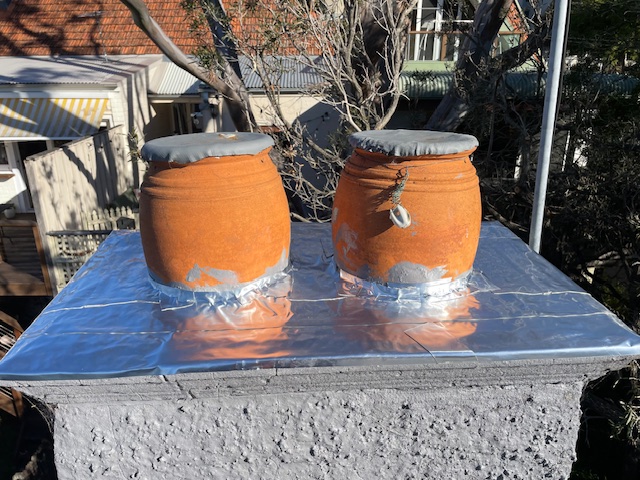
This job below was in Glebe. A roofer has capped the chimney pots, but left a crack where the bees could easily enter. I relocated to bees to my apiary, removed all honeycombs, and sealed the entire top of the chimney:
Short video here: https://www.instagram.com/sydneybeeshop/reel/Cn8zcmHjIJH/
This job was in Mosman. The third chimney-flu had been capped and bees entered through a gap in the mortar. The homeowners found honey leaking out of their fireplace after a 40-degree day. The wax combs had softened in the heat and fallen down the chimney! Over 10kg of honey was left at the top of the chimney, an equal or greater amount must have fallen. We removed the remaining honey, re-pointed the mortar, removed the old TV antenna, installed flashing across the entire chimney, and repainted the chimney while we were up there (steep/slick access on this one…)

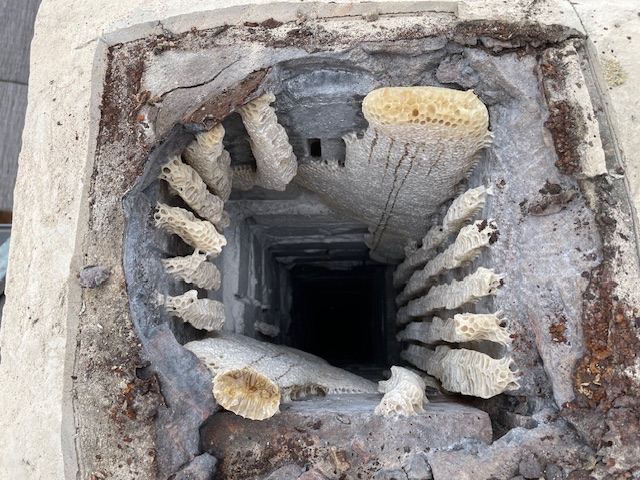


This job was in Balmain. Again, the chimney had been capped, but a corner of the cement-board snapped-off, leaving a hole for the bees to enter. I replaced the old cement with ceramic tiles (far more durable than cement-board) and sealed all the edges with flexible butyl-rubber flashing.

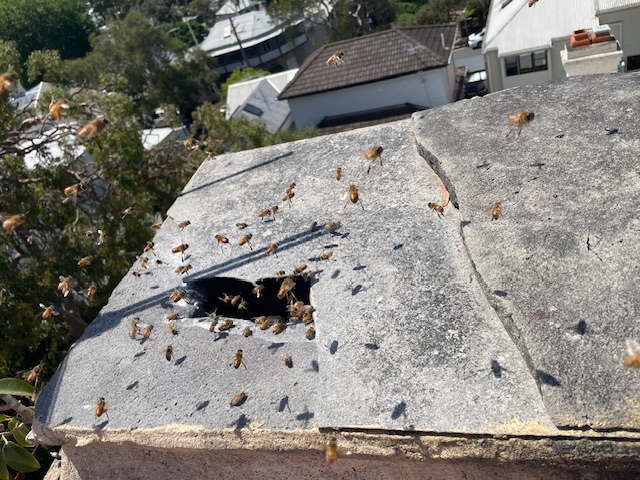
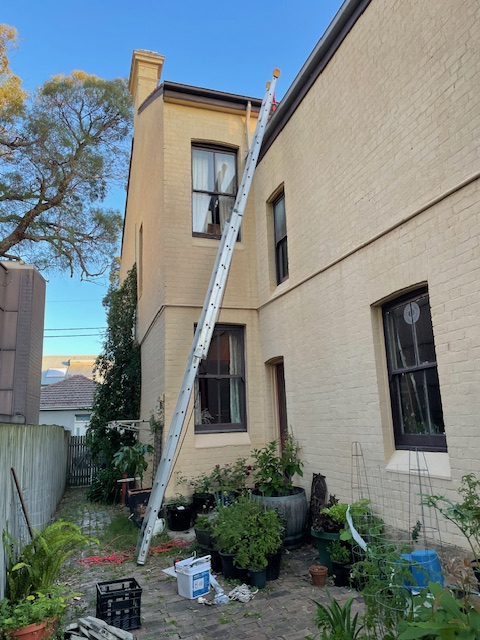
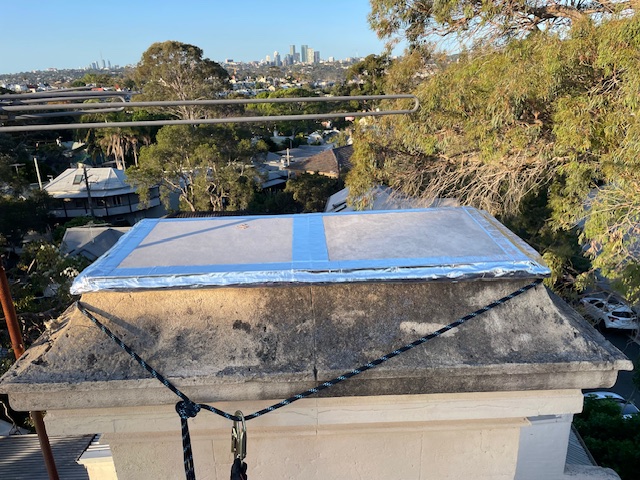
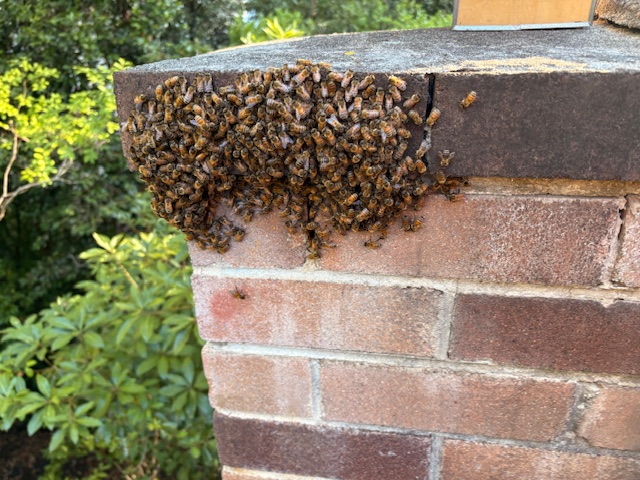
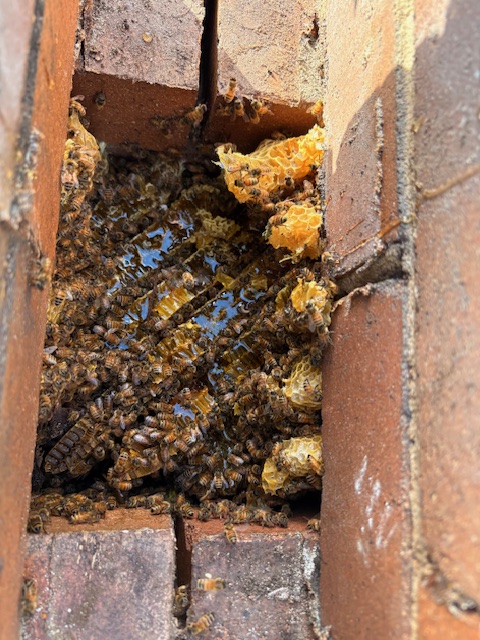
The job below was in Wahroonga, where the homeowner was getting bees inside the house for a few weeks before calling me. It was a 35-degree day when I removed the bees, so they were clustered on the outside of the chimney to stay cool. They had filled the whole width of the cavity, with some combs falling down when I removed the chimney cap:
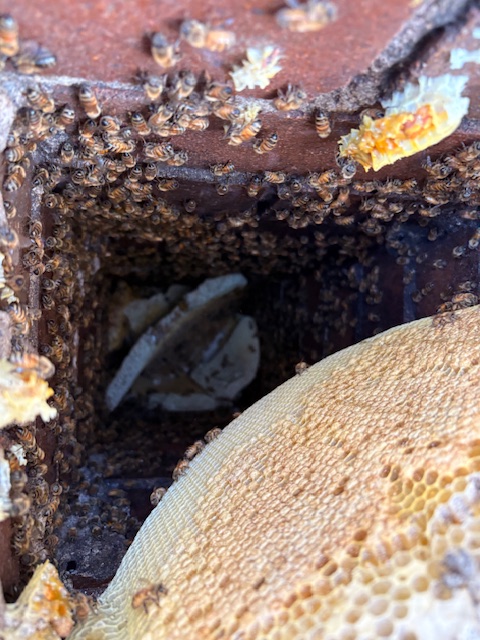
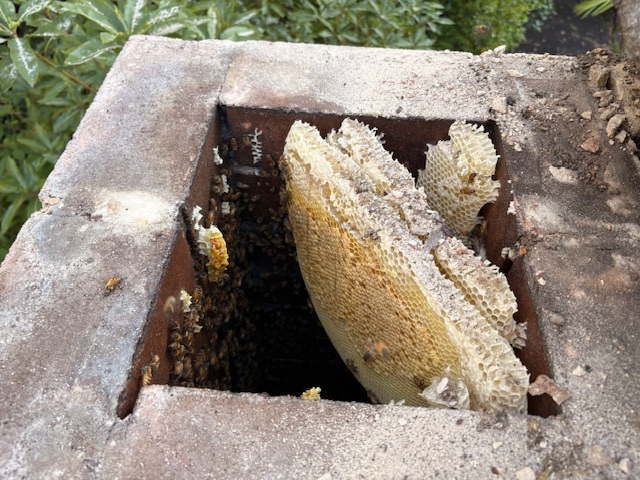
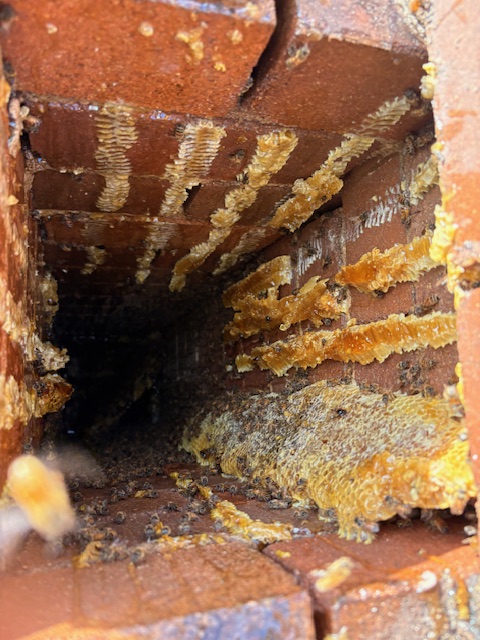
In this job, in Turramurra, the bees had moved into an OPEN chimney (not a great choice for the bees, as they will get rained-on). They built their combs about 60cm down. I used a garden compost-auger to catch the combs after cutting them free on the edges. I finished the job by installing a ceramic tile on top with construction adhesive plus mortar.
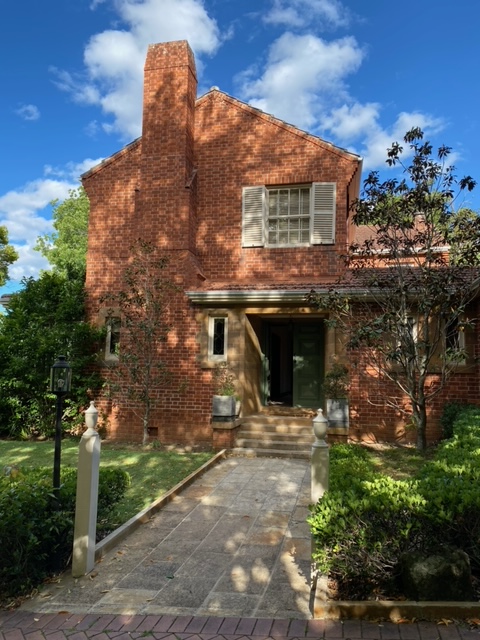

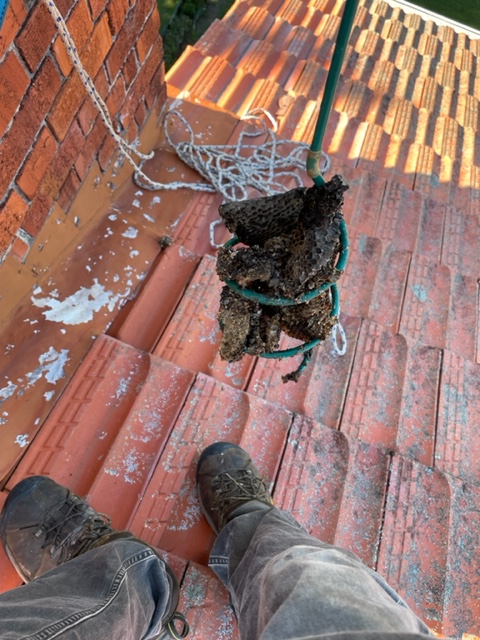

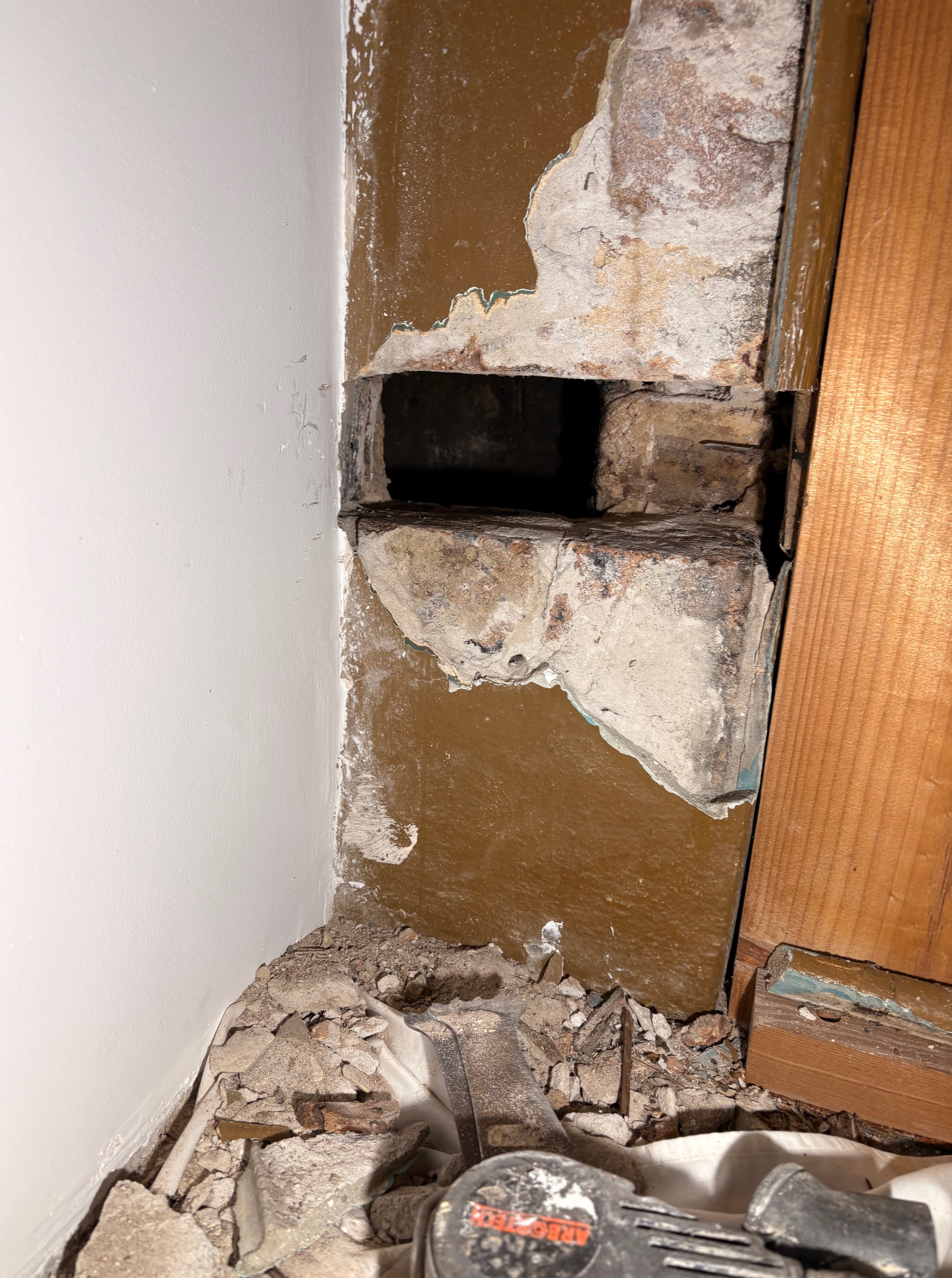
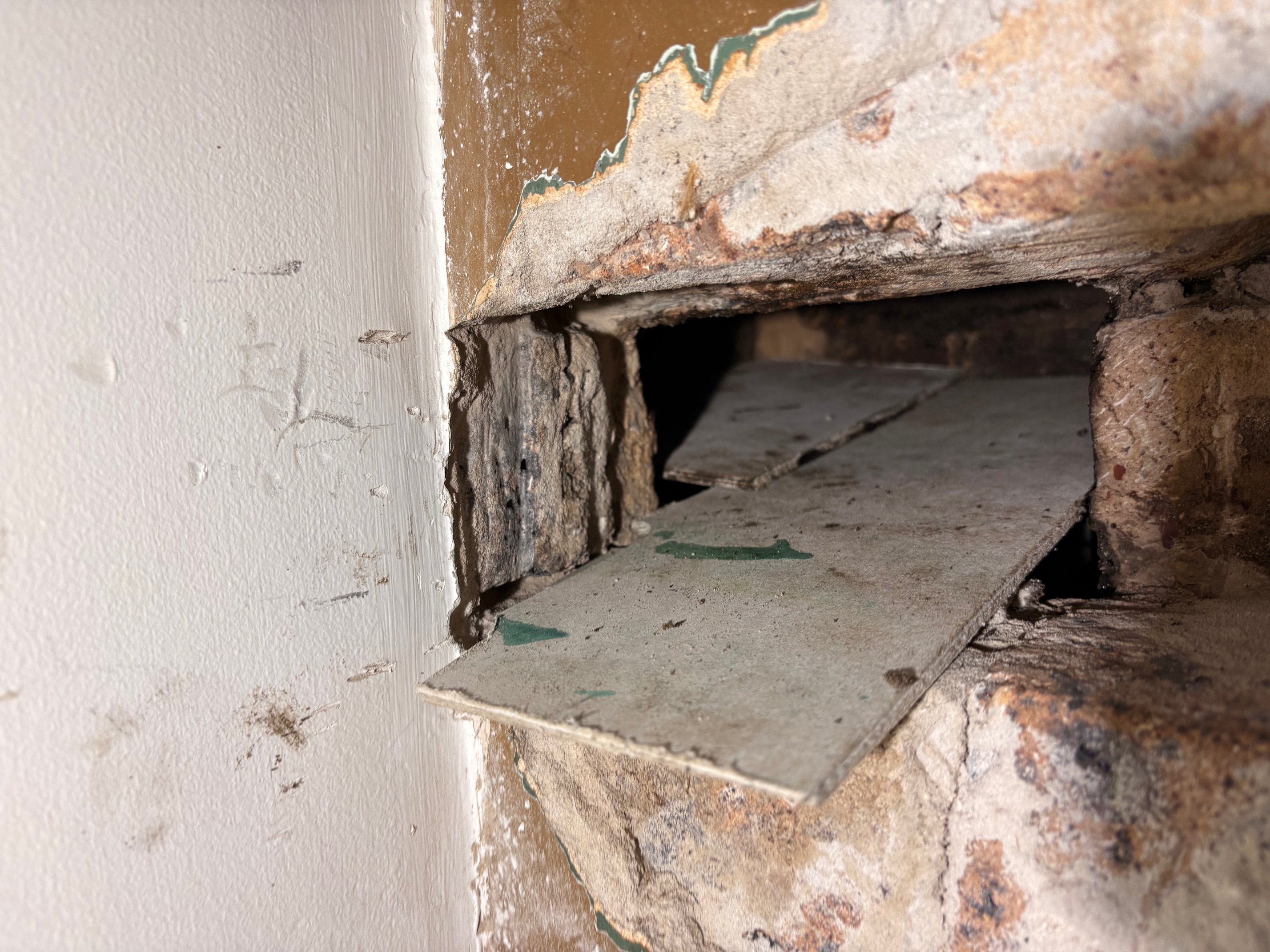
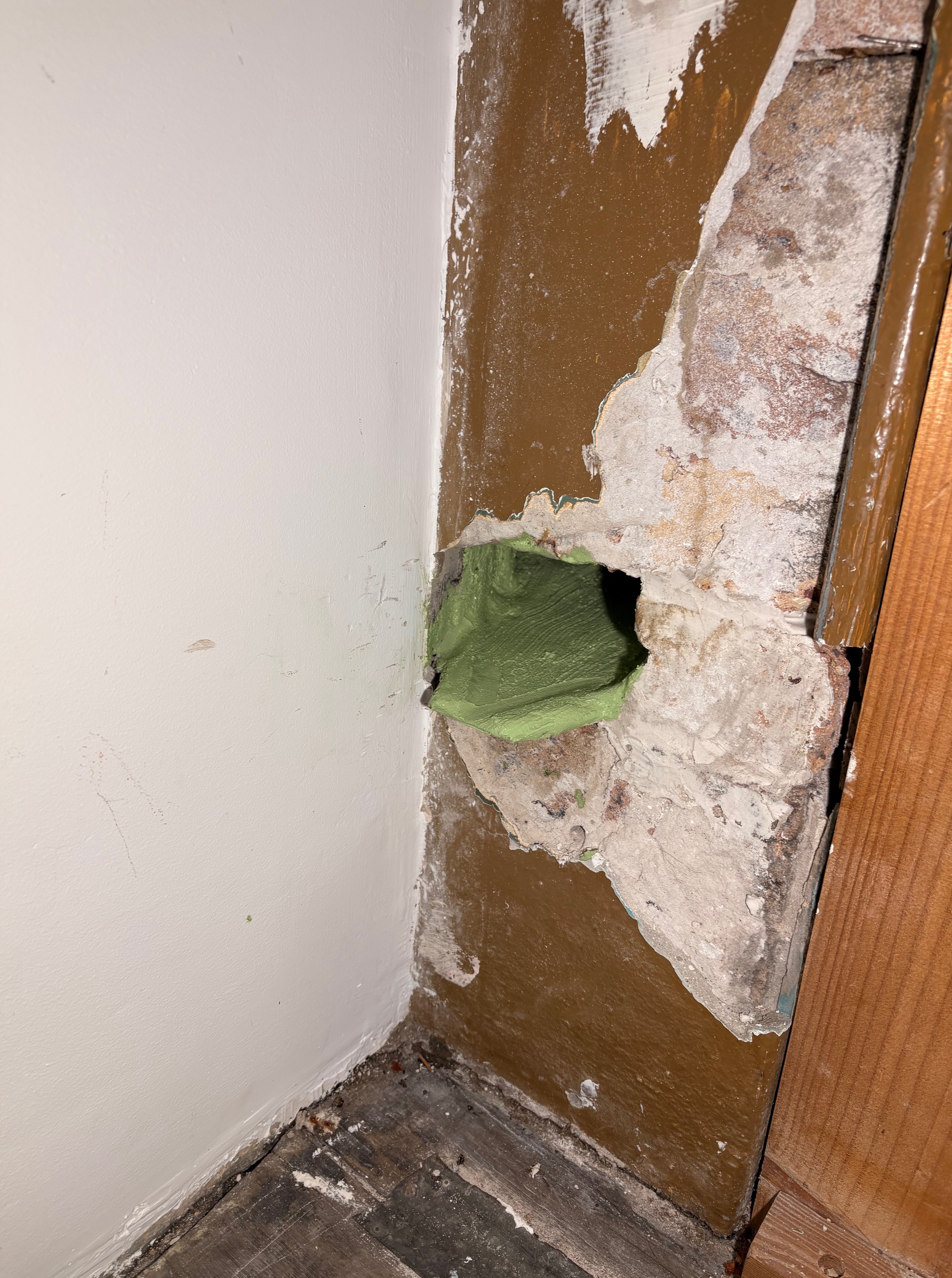
In some cases we have honey leaking from a chimney but we cannot remove the honeycombs. The best option in these cases is often to install a “chute” to catch/contain in the dripping honey. The project below was especially hard due to limited access to the chimney (only one brick was removed). Cement-board forms the slope of the “chute”, plaster is used to fill the corners, and green waterproofing membrane is used to waterproof it.
This swarm in Randwick had not moved into the chimney, yet. I used a custom-made cordless bee vacuum to relocate them safely. (I also removed the old TV antenna while I was up there…)

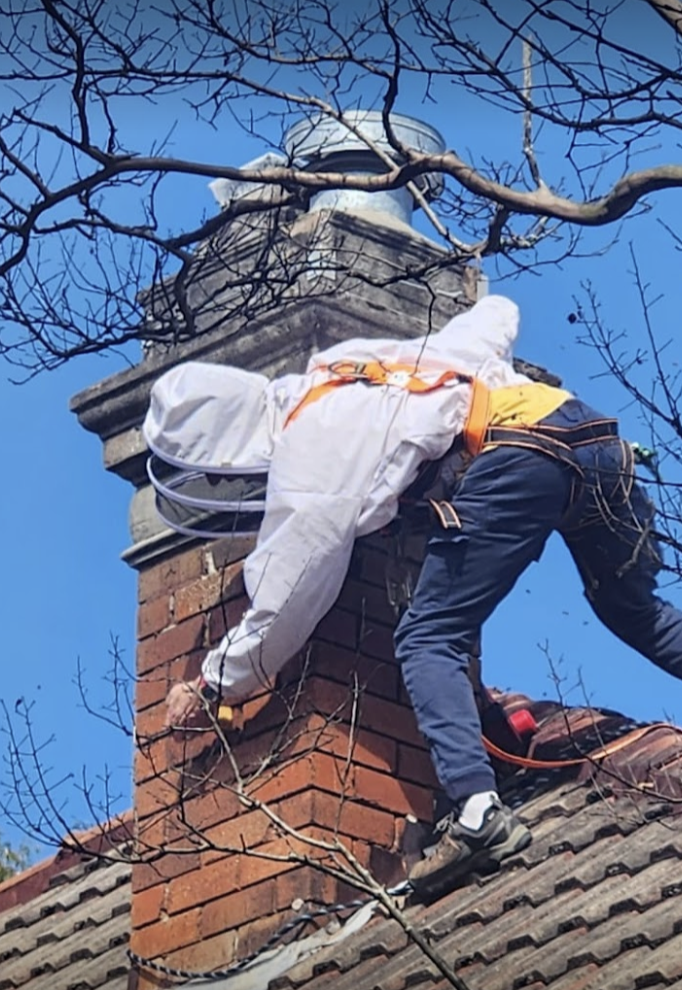
After removing bees, it is important to seal the chimney to prevent future swarms from re-colonizing the same space. They will be attracted to the smell of leftover wax/honey. To preserve the functionality of this chimney and the aesthetics of this historic home, I wrapped stainless mesh around the chimney-pot to keep bees out.


This job in Punchbowl had a bee nest extending more than 1.5 meters down the chimney. They entered through the multiple holes in the mortar after the chimney was capped with a piece of fibre-cement (left photo). I removed all bees/combs, cleaned the bricks, patched the mortar (dark red in photos) and installed a durable ceramic tile on top (right photo).


This project in St Ives was not a chimney, but had equally challenging access. I lifted the roof tiles to gain access to the nest, and re-fit the tiles after dusk had fallen and I had captured all the bees (and removed all their combs). Access via the ceiling inside was possible, but would have required more work to repair to the Gyprock plasterboard and painting.


Below are bees that moved into a chimney in Concord West. Less than 2 months old, but combs were already 40+cm tall. I could pull most of the combs up out of the chimney, some fell down into the fireplace.
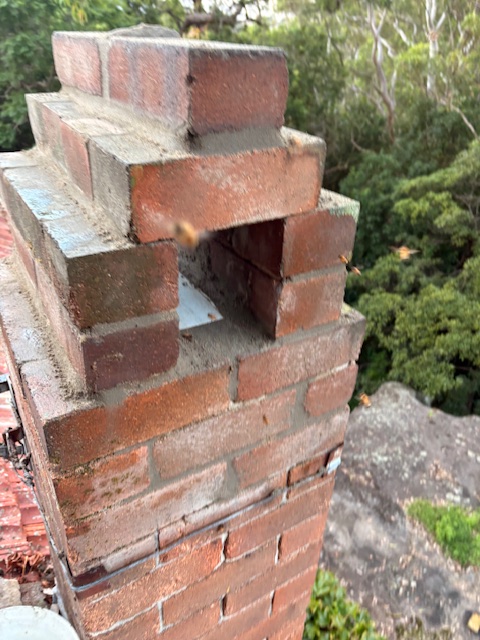
Below was a standard chimney bee colony, except that the chimney cap was formed from bricks instead of having a clay chimney pot. I am proud of the repair I completed. You will see a white tile under the arch which I installed to properly seal the chimney against bees and other insects.
Please contact Henry at 0423 298 841 to discuss your situation.
Return to main page here: HERE

